
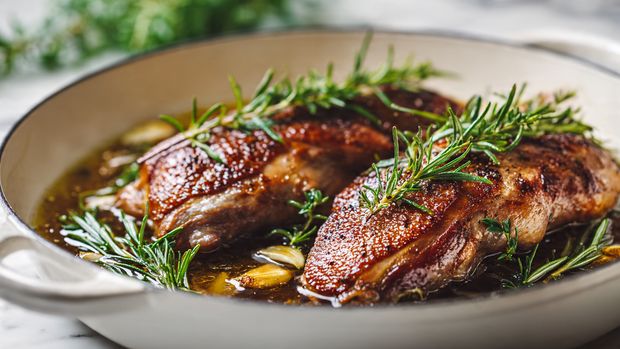
If you’ve ever wanted to impress with a restaurant-quality dish at home, the French Herb-Roasted Duck Breast with Pan Sauce Recipe delivers exactly that experience with ease and elegance. Picture a beautifully crisp golden skin giving way to tender, rosy, and juicy duck breast, infused with fragrant French herbs like thyme and rosemary. This dish perfectly balances rich flavors with a silky pan sauce that brings everything together, making it a memorable meal for any occasion, especially cozy dinners for two.

Ingredients You’ll Need
Keeping the ingredient list straightforward ensures that each component shines in harmony. Every herb, seasoning, and liquid is essential for building the layers of flavor and texture that make this dish so special, from the crisp skin to the complex pan sauce.
- 2 duck breasts (about 6 oz each): The star of the show, providing rich flavor and a tender texture.
- ¾ tsp salt: Enhances natural flavors and helps season the duck deeply.
- ½ tsp black pepper: Adds a subtle heat that complements the duck’s richness.
- ½ tsp dried thyme: Brings a classic French herb aroma that brightens the dish.
- ½ tsp dried rosemary: Offers an earthy, piney note that pairs beautifully with poultry.
- 1 garlic clove, crushed: Infuses the pan sauce with a gentle punch of flavor.
- ¼ cup chicken broth: Forms the savory base of the pan sauce, keeping it light and flavorful.
- 2 tbsp red wine or balsamic vinegar: Adds acidity to balance the richness of the duck.
- 1 tsp honey: Introduces a touch of sweetness to round out the sauce perfectly.
- 1 tbsp butter: Finishes the sauce with a smooth, glossy texture and richness.
- Optional sides (roasted potatoes, green beans, wild rice, cauliflower purée): These sides complement the duck while adding color and variety to your plate.
How to Make French Herb-Roasted Duck Breast with Pan Sauce Recipe
Step 1: Prepare the Duck
Start by patting your duck breasts completely dry; this is crucial for crispy skin. Score the skin carefully in a crisscross pattern, but don’t cut into the meat so the fat will render evenly and the skin crisps beautifully. Season both sides generously with salt, pepper, thyme, and rosemary. Let the flavors mingle by resting the duck for about 10 minutes at room temperature before cooking.
Step 2: Render the Duck Skin
Place your duck breasts skin-side down into a cold pan — starting cold is key to melting that fatty layer slowly. Turn the heat to medium and let them cook for 7 to 10 minutes. You’ll notice the skin transforming to a gorgeous golden brown and becoming delightfully crisp as the fat renders out. Flip the breasts and cook for another 2 to 3 minutes on the meat side to seal in the juices.
Step 3: Roast
Transfer the duck breasts to a preheated oven at 400°F (205°C). Roast for 6 to 8 minutes to reach a perfect medium-rare, aiming for an internal temperature around 130 to 135°F (54 to 57°C). This step ensures the duck remains succulent and rosy inside. After roasting, let the meat rest for 5 minutes to redistribute the juices, guaranteeing each bite is tender and juicy.
Step 4: Make the Pan Sauce
Drain excess fat from your pan but leave about 1 tablespoon for flavor. Add the crushed garlic and sauté briefly for 30 seconds to awaken its aroma. Pour in chicken broth and your choice of red wine or balsamic vinegar, simmering for about 2 minutes to reduce and concentrate. Sweeten the sauce with a teaspoon of honey and finish by stirring in a tablespoon of butter for a glossy, luscious finish that perfectly complements the rich duck.
Step 5: Serve
Slice the rested duck breasts into elegant medallions and generously spoon the warm pan sauce over the top. This final flourish adds moisture, flavor depth, and visual appeal, turning your plate into a masterpiece of French-inspired cooking.
How to Serve French Herb-Roasted Duck Breast with Pan Sauce Recipe
Garnishes
Fresh sprigs of thyme or rosemary complement the dish’s herbal notes and add a lovely green pop on the plate. For a bright contrast, a few pomegranate seeds or a light drizzle of good-quality olive oil can elevate the presentation while enhancing the flavors subtly.
Side Dishes
Classics like roasted potatoes cooked in rendered duck fat bring crispy, savory goodness that pairs perfectly. Green beans sautéed with garlic, wild rice for earthiness, or a silky cauliflower purée add texture variety and balance the richness of the duck without competing with its flavors.
Creative Ways to Present
Try arranging the sliced duck fanned out neatly on a warm plate with the pan sauce cascading over. Layering the breast atop a bed of wild rice or dollops of cauliflower purée gives a restaurant-worthy touch. Using elegant white plates or rustic wooden boards can also complement the dish’s natural beauty depending on the vibe you want to create.
Make Ahead and Storage
Storing Leftovers
Leftover duck breast can be refrigerated for up to two days in an airtight container to maintain freshness. Store the pan sauce separately to prevent it from overpowering or overly soaking the meat. This ensures that when you’re ready to enjoy it again, the flavors are still harmonious and vibrant.
Freezing
While duck breast is best fresh, you can freeze cooked portions wrapped tightly in plastic wrap and then foil, or placed in a freezer-safe container. Consume within one month for best quality. Keep the pan sauce separately if possible, as sauces often reheat better when stored apart from the meat.
Reheating
Reheat gently in a skillet over low heat to preserve texture and prevent rubbery skin. Avoid microwaving as it can toughen the meat and ruin the crispy exterior. A quick warm-up ensures the duck remains juicy and the pan sauce retains its silky finish.
FAQs
Can I use fresh herbs instead of dried for the French Herb-Roasted Duck Breast with Pan Sauce Recipe?
Absolutely! Fresh herbs can add a brighter, more vibrant aroma. Use about double the amount of fresh herbs compared to dried since fresh herbs are less concentrated.
How do I know when the duck breast is cooked to medium-rare?
The best way is with a meat thermometer. Aim for an internal temperature of 130 to 135°F (54 to 57°C). Remember, the duck will continue to cook slightly while resting.
What can I substitute if I don’t have red wine for the pan sauce?
Balsamic vinegar is a fantastic substitute as it offers acidity and depth. Alternatively, a splash of red grape juice with a bit of vinegar can work in a pinch.
Is it necessary to score the duck skin?
Yes, scoring the skin helps render the fat evenly and ensures the skin crisps up nicely without curling or burning.
Can I make the pan sauce ahead of time?
You can prepare the pan sauce ahead, but it’s best to reheat it gently and add the butter just before serving for that perfect glossy finish.
Final Thoughts
Nothing quite beats the warm satisfaction of plating up the French Herb-Roasted Duck Breast with Pan Sauce Recipe for yourself or loved ones. From the first crispy bite to the rich, silky sauce that ties everything together, this dish is a true celebration of classic French flavors with a homey twist. Don’t hesitate—grab those simple but powerful ingredients and create a delicious experience at home that will have everyone asking for seconds.
Print
French Herb-Roasted Duck Breast with Pan Sauce Recipe
- Prep Time: 15 minutes
- Cook Time: 20 minutes
- Total Time: 35 minutes
- Yield: 2 servings 1x
- Category: Main Course
- Method: Roasting
- Cuisine: French
Description
Experience a luxurious French Herb Roasted Duck Breast dish featuring crisp, golden skin and tender, juicy meat. Infused with fragrant herbs like thyme, rosemary, and garlic, this restaurant-quality recipe is perfect for an elegant two-person dinner. Served with a simple pan sauce made from chicken broth, red wine or balsamic vinegar, honey, and butter, this dish delivers rich flavor balanced with aromatics, ideal for aficionados of classic French cuisine.
Ingredients
Duck
- 2 duck breasts (about 6 oz each)
- ¾ tsp salt
- ½ tsp black pepper
- ½ tsp dried thyme
- ½ tsp dried rosemary
- 1 garlic clove, crushed
Pan Sauce
- ¼ cup chicken broth
- 2 tbsp red wine or balsamic vinegar
- 1 tsp honey
- 1 tbsp butter
Optional Sides
- Roasted potatoes
- Green beans
- Wild rice
- Cauliflower purée
Instructions
- Prepare the duck: Pat the duck breasts dry thoroughly. Using a sharp knife, score the skin in a crisscross pattern without cutting into the meat beneath. Season both sides evenly with salt, black pepper, dried thyme, and dried rosemary. Allow the seasoned duck breasts to sit for 10 minutes to let flavors penetrate.
- Render the duck skin: Place the duck breasts skin-side down in a cold pan. Turn the heat to medium and cook gently for 7 to 10 minutes to slowly render the fat. The skin will become golden brown and crisp. Flip the duck breasts and cook the meat side for an additional 2 to 3 minutes.
- Roast: Preheat your oven to 400°F (205°C). Transfer the duck breasts to the oven and roast them for 6 to 8 minutes to achieve medium-rare doneness. The internal temperature should reach 130–135°F (54–57°C). After roasting, remove the duck breasts and let them rest for 5 minutes before slicing to allow juices to redistribute.
- Make the pan sauce: Remove excess rendered duck fat from the pan, leaving approximately 1 tablespoon for flavor. Add the crushed garlic to the pan and sauté for 30 seconds until fragrant. Stir in the chicken broth and red wine (or balsamic vinegar) and bring the mixture to a simmer for 2 minutes. Stir in the honey, then finish by whisking in 1 tablespoon of butter to give the sauce a glossy finish.
- Serve: Slice the rested duck breasts into medallions. Arrange on plates and spoon the warm pan sauce over the top. Serve with your choice of optional sides such as roasted potatoes, green beans, wild rice, or cauliflower purée for a complete meal.
Notes
- Starting in a cold pan ensures perfect skin crisping on the duck breasts.
- Duck continues cooking while resting; avoid overshooting the internal temperature to maintain juiciness.
- Rendered duck fat can be saved and used to add flavor to roasted potatoes or other dishes.
- Use fresh herbs instead of dried for a brighter, more aromatic flavor.
- French duck breast (magret) is richer than chicken; pairing it with acidic sauces like wine, balsamic, or citrus helps balance the fat beautifully.
- For medium doneness, roast the duck 1 to 2 minutes longer.
- Refrigerate cooked duck for up to 2 days and reheat gently in a skillet over low heat to preserve the skin texture. Avoid microwaving, which can make the skin rubbery.
Your email address will not be published. Required fields are marked *