
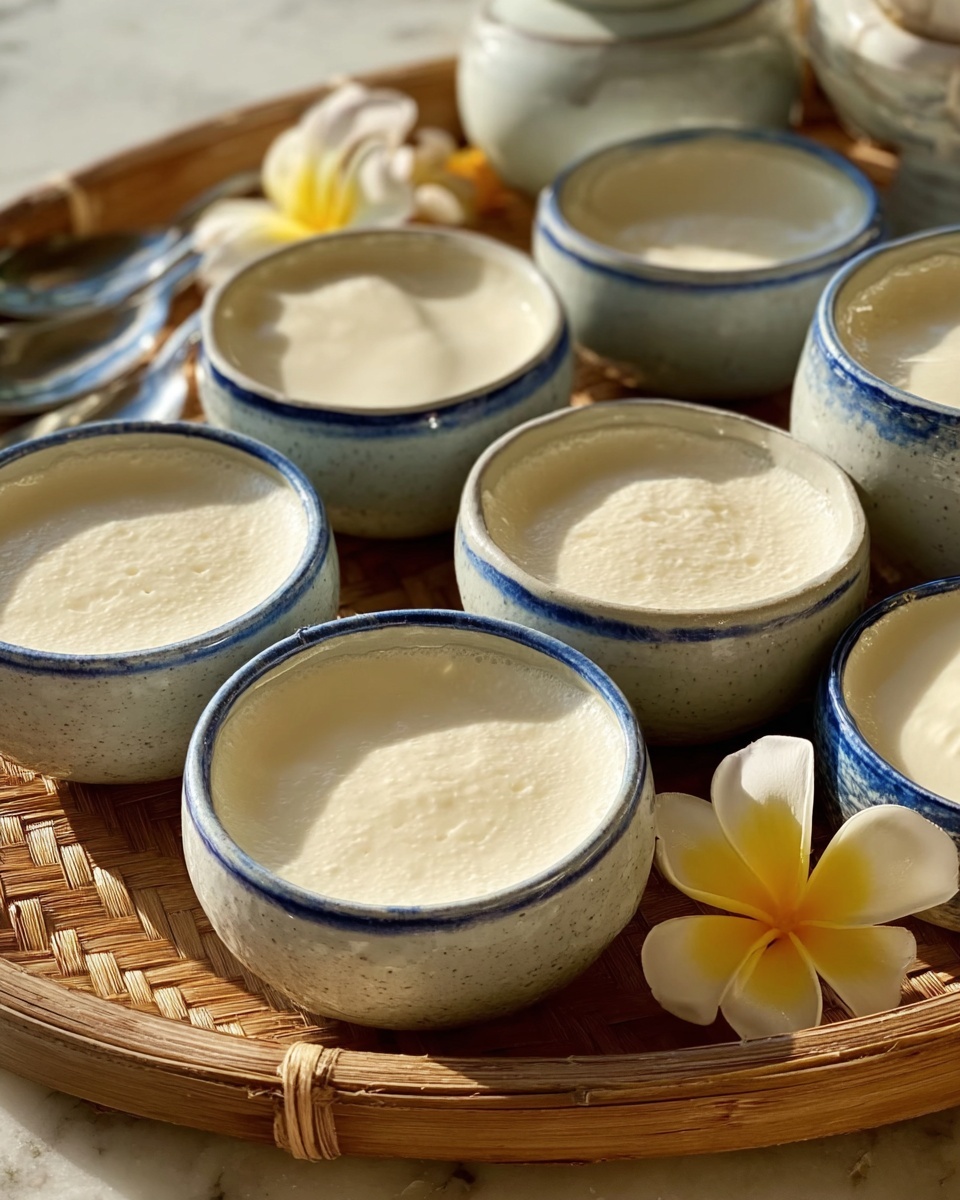
If you’ve ever wandered through a bustling Thai street market, you’ve no doubt been drawn to the cute little ceramic cups of Thai Coconut Pudding Recipe (Kanom Tuay). These sweet, creamy, and gently salty puddings are a staple of Thai dessert carts and family feasts alike. With their signature two-layer contrast—richly sweet on the bottom, delicate and salty on top—these treats are as fun to eat as they are to make. Best of all, this recipe lets you recreate the enchanting flavors of Thailand in your own kitchen, using simple pantry ingredients with a few optional twists for authenticity. Ready to fall in love with a new favorite dessert?

Ingredients You’ll Need
The magic of Thai Coconut Pudding Recipe (Kanom Tuay) lies in just a handful of everyday ingredients. Each one plays a special role in crafting the dessert’s silky texture and classic layered flavor, so let’s take a closer look at what you’ll need and how they work together.
- Coconut sugar: This lends a deep, toasty sweetness and lovely amber hue to the base layer; palm sugar makes a good substitute if you can find it.
- Rice flour: Essential for the pudding’s gentle firmness without making it heavy, rice flour sets up the layers just right.
- Tapioca starch: Just a touch adds that signature wobble and a pleasingly glossy appearance.
- Water: Keeps the pudding light and lets the coconut flavors shine through.
- Coconut milk: For both flavor and velvety richness, this is non-negotiable—choose the full-fat version for best results.
- Pandan leaves (optional): If you want a truly authentic aroma and beautiful green tint, fresh or frozen pandan is a treat; just don’t worry if you have to skip it.
- Salt: Pure magic in small amounts—it makes the coconut flavor pop and enhances the lovely salty top layer that defines Kanom Tuay.
How to Make Thai Coconut Pudding Recipe (Kanom Tuay)
Step 1: Prepare and Warm the Bowls
Start by placing your small ceramic cups or bowls in a steamer. Steaming the cups for about 10 minutes before adding any batter ensures that your pudding won’t stick when it’s time to enjoy. This extra step may seem simple, but it’s the secret behind perfectly-formed, easy-to-unmold puddings.
Step 2: Mix the Bottom Layer
In a medium bowl, combine the coconut sugar, half a cup of water, and pandan leaves if you have them. Use your hand to gently press and swirl the mixture, dissolving the sugar completely—some Thai cooks swear this step brings out the deepest pandan fragrance. Add half a cup of coconut milk, kneading it in for a smooth and glossy mixture.
Step 3: Combine the Flours
In a separate bowl, blend the rice flour and tapioca starch. Gradually whisk in your prepared sugar mixture, ensuring the batter stays lump-free and velvety. Don’t rush—smoothness at this stage means ultra-silky pudding later! Finally, strain the mixture to banish any pesky lumps or fibers.
Step 4: Steam the Bottom Layer
Pour just over a tablespoon of the batter into each pre-warmed bowl. Gently return them to the steamer and steam for about 10 minutes. While these set, move on to the decadent top layer.
Step 5: Mix the Top Layer
In a fresh bowl, stir together three tablespoons of rice flour with a quarter teaspoon of salt. Slowly whisk in a cup of coconut milk and a quarter cup of water until the batter is smooth and creamy. Once again, strain your mixture for the silkiest finish—texture is everything in Thai Coconut Pudding Recipe (Kanom Tuay).
Step 6: Pour and Steam the Top Layer
Once the bottom layer has set, use a spoon to carefully ladle the top layer mixture into each bowl, stopping just before you reach the rim. Steam for five to ten minutes longer. If you’re using slightly larger cups, you may need to go a bit longer to allow the coconut oil to rise and form its signature sheen.
Step 7: Cool and Serve
Take the bowls out of the steamer and let them cool completely before serving. The puddings are delicious both at room temperature or chilled in the fridge—either way, they’re irresistibly soft and luscious, ready to pop out of their cups and be devoured!
How to Serve Thai Coconut Pudding Recipe (Kanom Tuay)
Garnishes
While these puddings are delightfully simple on their own, you can elevate them with a scatter of fresh pandan strands, toasted coconut flakes, or even a sprinkle of black sesame seeds. Each garnish adds a different texture or fragrance, enhancing the classic Thai Coconut Pudding Recipe (Kanom Tuay) experience.
Side Dishes
Kanom Tuay pairs beautifully with fresh tropical fruits like sliced mango, papaya, or lychee. For a full-on dessert platter, serve alongside sticky rice or other traditional Thai sweets, making a delightful buffet of flavors and textures at your next dinner party.
Creative Ways to Present
Think beyond the steamer cups! Try unmolding the puddings onto a banana leaf for a striking, authentic presentation. Or carefully cut the firmed-up pudding into cubes and pile them into small glass jars for a modern twist. However you serve them, let the contrast of the two layers shine.
Make Ahead and Storage
Storing Leftovers
These puddings are perfect for making ahead, and they keep beautifully in an airtight container in the fridge for up to three days. Just make sure the puddings are fully cooled before covering to avoid condensation and excess moisture gathering on the surface.
Freezing
While you can technically freeze Thai Coconut Pudding Recipe (Kanom Tuay), be aware the texture may turn slightly grainy once thawed. For best results, wrap each portion tightly and thaw gently in the fridge before serving—though nothing beats the just-steamed freshness.
Reheating
If you’d like to serve your leftovers warm, simply pop the puddings in a steamer or microwave for 10–20 seconds. Keep a close eye, as overheating can change their silky texture. Enjoy as soon as they’re just warmed through!
FAQs
Can I substitute coconut sugar with regular sugar?
Absolutely! While coconut sugar gives a signature flavor and caramel tint, brown sugar or even white sugar can be used in a pinch; the result will be slightly lighter in color and flavor, but still tasty.
Do I need to use pandan leaves?
No, pandan leaves are optional, but they do add a wonderful fragrance and a traditional green hue to Thai Coconut Pudding Recipe (Kanom Tuay). If you can’t find pandan, your puddings will still be delicious and authentic.
Why do I have to strain the mixtures?
Straining ensures your layers are perfectly smooth, with no flour lumps or stray bits of pandan getting in the way. This extra step makes the final result restaurant-quality every time.
Can I use other types of flour if I can’t find rice flour?
Rice flour is important for the classic texture, but in a pinch, you could try cornstarch or potato starch. The flavor and texture will change a bit, but you’ll still get a tasty layered dessert.
Is this recipe gluten-free?
Yes! Thai Coconut Pudding Recipe (Kanom Tuay) is naturally gluten-free thanks to the use of rice and tapioca flours, making it a wonderful treat for anyone avoiding gluten.
Final Thoughts
There’s something almost magical about whipping up Thai Coconut Pudding Recipe (Kanom Tuay) at home—watching those lovely layers come together and sharing such a classic treat with friends and family. This is one recipe that captures the heart of Thai comfort food, and I can’t wait for you to try it. Give it a go, and let every spoonful transport you straight to Thailand!
Print
Thai Coconut Pudding (Kanom Tuay) Recipe
- Prep Time: 20 minutes
- Cook Time: 20 minutes
- Total Time: 40 minutes
- Yield: 20 servings 1x
- Category: Dessert
- Method: Steaming
- Cuisine: Thai
- Diet: Vegetarian
Description
Delight in the exotic flavors of Thailand with this traditional Thai Coconut Pudding recipe, known as Kanom Tuay. Layers of coconut-infused goodness make this dessert a true delight for your taste buds.
Ingredients
Bottom Layer:
- 1/2 cup coconut sugar (see notes)
- 1/2 cup rice flour
- 2 tablespoons tapioca starch
- 1/2 cup water
- 1/2 cup coconut milk
- 2 pandan leaves (optional)
Top Layer:
- 1 cup coconut milk
- 1/4 cup water
- 3 tablespoons rice flour
- 1/4 teaspoon salt
Instructions
- Warm the bowls: Place ceramic cups in a steamer and steam over medium heat for 10 minutes.
- Make the bottom layer: Combine coconut sugar, water, and pandan leaves. Add coconut milk and knead until combined. Mix tapioca flour and rice flour in a separate bowl, then whisk in the sugar mixture. Strain the mixture and pour into warm bowls. Steam for 10 minutes.
- Make the top layer: Mix rice flour and salt in a bowl. Gradually whisk in water and coconut milk until smooth. Strain the mixture and spoon on top of the set bottom layer. Steam for 5–10 minutes more.
- Cool and serve: Let the pudding cool completely before serving, either at room temperature or chilled.
Notes
- You can adjust the sweetness by varying the amount of coconut sugar according to your preference.
- If you don’t have pandan leaves, you can omit them for a slightly different flavor.
Nutrition
- Serving Size: 1 pudding cup
- Calories: 120
- Sugar: 8g
- Sodium: 50mg
- Fat: 4g
- Saturated Fat: 3g
- Unsaturated Fat: 1g
- Trans Fat: 0g
- Carbohydrates: 20g
- Fiber: 1g
- Protein: 2g
- Cholesterol: 0mg
Your email address will not be published. Required fields are marked *