
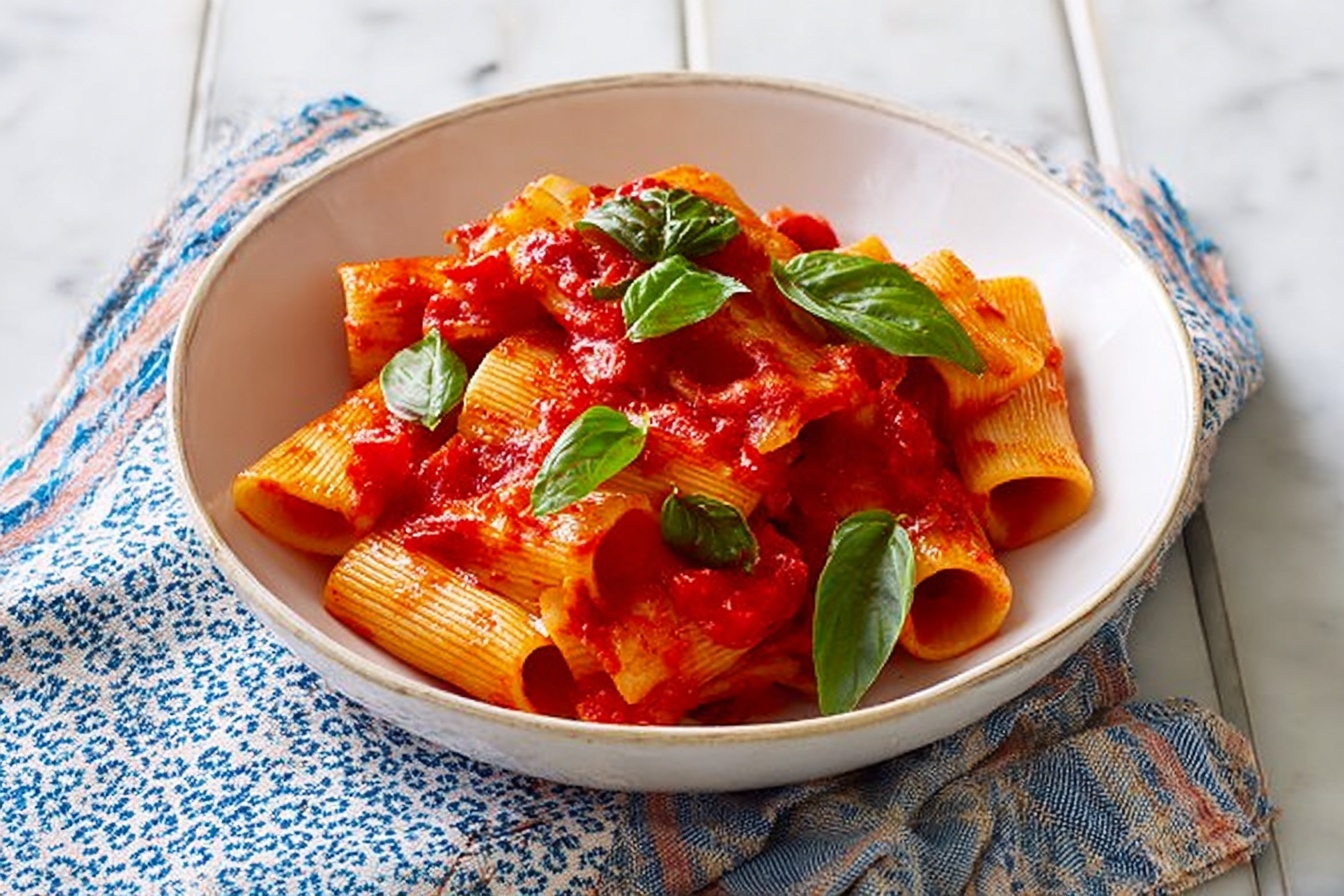
If you’re looking for a true Italian comfort dish that’s simple but soul-satisfying, you’ll love Paccheri With Fresh & Canned Tomato Sauce. This gorgeous pasta is bathed in a rustic tomato sauce that gets its rich flavor from the marriage of ripe cherry tomatoes and deep, savory canned San Marzano tomatoes. Plump, toothsome paccheri noodles catch the sauce beautifully, making every bite bright, aromatic, and absolutely crave-worthy. It’s a recipe that brings the warmth of an Italian kitchen right to your table!

Ingredients You’ll Need
This recipe’s magic comes from using only a handful of honest, high-quality ingredients—each one brings something special to the finished dish, whether it’s flavor, color, or texture. Don’t be tempted to skip or substitute; every element counts in Paccheri With Fresh & Canned Tomato Sauce.
- Olive Oil: Acts as the flavorful base, infusing the sauce and helping the onions cook gently until sweet.
- Finely Chopped Onion: Adds mellow sweetness and body to the sauce—take your time sautéing for best results.
- Garlic Cloves, Minced: Classic Italian aroma and depth; mince finely for even distribution throughout the sauce.
- Chopped San Marzano Tomatoes (Canned): The gold standard for a rich, balanced tomato flavor that forms the sauce’s backbone.
- Chopped Fresh Basil, Divided: Lends freshness and fragrant herbal notes—save a little for the end to brighten everything up.
- Salt & Pepper To Taste: Essential for dialing in the perfect savory-sweet balance—taste and adjust as needed.
- Pinch of Red Pepper Flakes: For a flutter of gentle heat; if you prefer it mild, add just a little.
- Ripe Cherry Tomatoes, Chopped: Introduce a juicy pop and a hint of summery sweetness that makes the sauce sing.
- Paccheri Pasta (Or Pasta of Choice): Choose big, tubular paccheri for maximum sauce-clinging and slurp-worthy satisfaction.
- Grated Pecorino Romano or Parmesan Cheese (Optional): For finishing with a salty, nutty flourish at the table.
How to Make Paccheri With Fresh & Canned Tomato Sauce
Step 1: Sauté the Aromatics
Start by heating the olive oil in a large saucepan over medium heat. Once shimmering, add your finely chopped onion and cook gently. Let the onion turn soft and translucent, which should take about 7 minutes—this slow cooking draws out their natural sweetness and sets a gorgeous base for the rest of the sauce.
Step 2: Add Garlic and Build Flavors
Sprinkle in the minced garlic and continue to sauté for another 1-2 minutes, just until you catch that heady aroma. Don’t let it brown; you want it fragrant without bitterness. This garlicky goodness is the heart of Paccheri With Fresh & Canned Tomato Sauce!
Step 3: Simmer Canned Tomatoes and Herbs
Pour in both cans of chopped San Marzano tomatoes, then add 3 tablespoons of the chopped basil, salt, pepper, and a small pinch of red pepper flakes. Allow this to simmer gently for about 15 minutes, stirring occasionally. This melds all the flavors and helps the sauce thicken into a luscious base.
Step 4: Add Fresh Cherry Tomatoes
Next, toss in your chopped cherry tomatoes. They’ll cook down for another 15 minutes, releasing their juices and creating little pockets of bright, fresh flavor. Keep stirring—it’ll look and smell irresistible as the two types of tomato unite.
Step 5: Cook the Paccheri Pasta
While the sauce bubbles away, bring a big pot of lightly salted water to a boil. Add your paccheri and cook until perfectly al dente, following the package instructions. The pasta should be chewy and robust enough to capture all that sauce.
Step 6: Finish and Season the Sauce
Stir the last of your fresh basil into the simmered sauce. Now’s the moment to taste and adjust the seasoning—add a pinch more salt or pepper if needed. The finished sauce should be layered, lively, and evocative of a kitchen in full swing.
Step 7: Toss Pasta With Sauce
Drain the pasta and return it to the pot. Add a ladle or two of your tomato sauce and toss to coat every tube evenly. This extra step ensures the flavor seeps into every bite, not just what’s ladled on top.
Step 8: Serve and Enjoy
To plate, dish up the pasta into individual bowls and top with a generous spoonful of the reserved sauce. Bring grated Pecorino Romano or Parmesan cheese to the table, letting everyone finish their bowl just as they like it. The result: a bowl of Paccheri With Fresh & Canned Tomato Sauce that’s as beautiful as it is delicious!
How to Serve Paccheri With Fresh & Canned Tomato Sauce
Garnishes
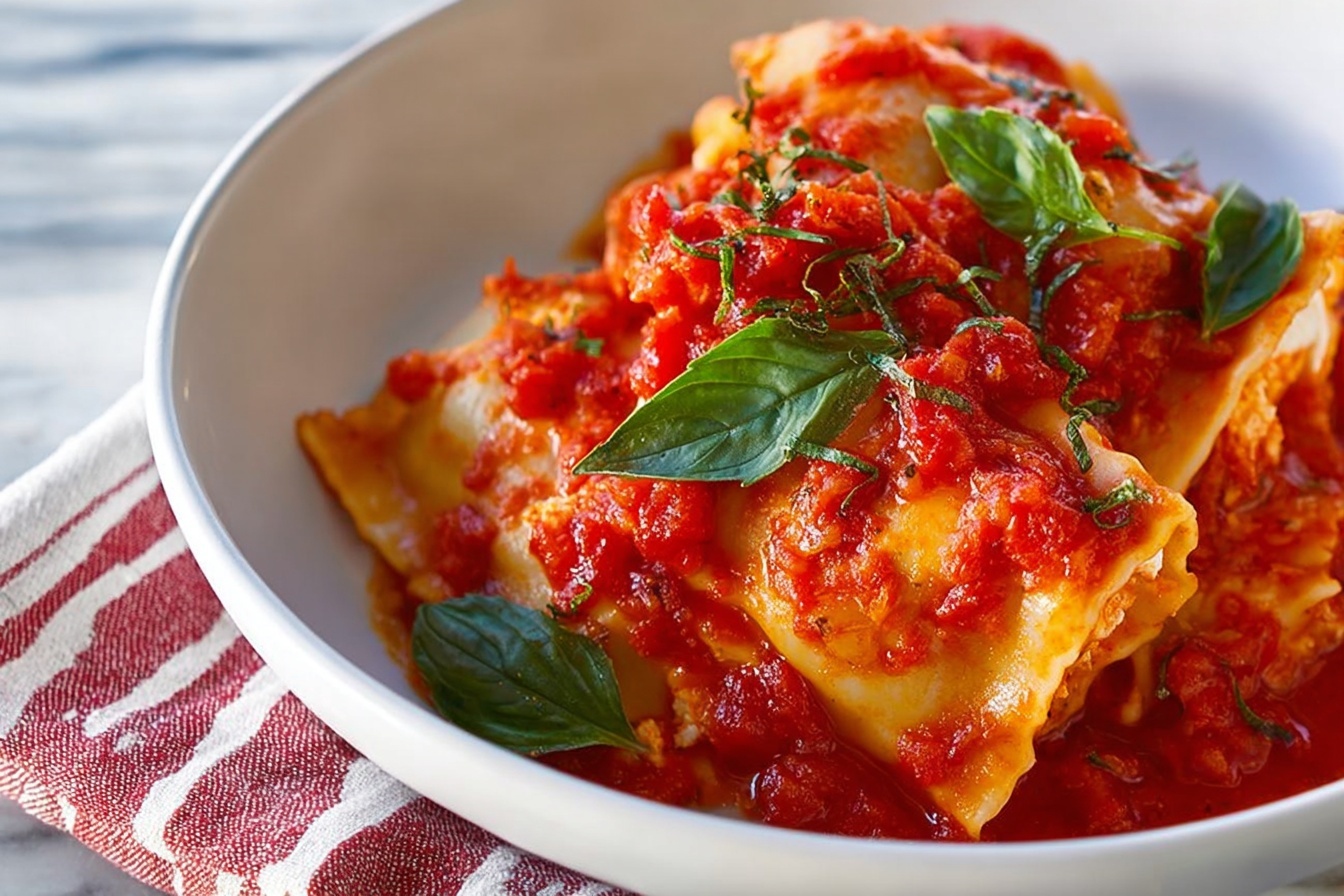
Give your bowls a flourish of chopped fresh basil, an aromatic drizzle of extra virgin olive oil, and a healthy blanket of grated Pecorino Romano or Parmesan. Freshly cracked black pepper is always welcome, and a sprinkle of flaky sea salt adds a special touch. These details brighten each serving and make the colors and flavors pop.
Side Dishes
For a classic Italian dinner, pair your Paccheri With Fresh & Canned Tomato Sauce with a crisp green salad dressed in lemon and olive oil, or a simple platter of marinated olives. Garlic bread or a warm, crusty loaf is perfect for mopping up any last bit of sauce in the bowl—you won’t want to waste a drop!
Creative Ways to Present
If you’re serving this dish to guests, try piling paccheri high in a serving bowl with extra sauce poured artistically over the top. Individual gratin dishes look elegant and help keep the pasta hot. Add a tableside grater for the cheese and let everyone create their own perfect plate—a fun, interactive experience that highlights the joy of Paccheri With Fresh & Canned Tomato Sauce.
Make Ahead and Storage
Storing Leftovers
Let any leftover pasta and sauce cool to room temperature before storing in an airtight container. It will stay fresh and flavorful in the refrigerator for up to three days. When possible, store pasta and sauce separately to keep the noodles from absorbing too much sauce and becoming soft.
Freezing
If you want to freeze Paccheri With Fresh & Canned Tomato Sauce, it’s best to cool the sauce completely and freeze it on its own in a freezer-safe container for up to three months. Cook fresh pasta when you’re ready to serve, then reheat the sauce and toss it together—this preserves the best texture.
Reheating
To reheat, gently warm the sauce in a saucepan over low heat. Add a splash of water if it’s too thick. For leftover pasta already mixed with sauce, transfer portions to a skillet, add a tablespoon of water, cover, and warm through over medium-low heat. Stir occasionally until hot, then garnish and serve as if fresh!
FAQs
Can I use only canned or only fresh tomatoes?
You can, but using both fresh and canned tomatoes together is what makes Paccheri With Fresh & Canned Tomato Sauce taste so dynamic—the canned tomatoes provide richness while the fresh cherry tomatoes add brightness and texture.
What pasta shapes work if I don’t have paccheri?
Penne rigate, rigatoni, or even ziti are great alternatives. The most important thing is to choose a tube-shaped pasta that can trap plenty of that amazing sauce—the experience will still be deliciously authentic.
Is this dish vegetarian?
Absolutely! Paccheri With Fresh & Canned Tomato Sauce is naturally vegetarian, and it shines without any added meat. For a vegan twist, simply skip the cheese or use your favorite dairy-free alternative.
Can I add other vegetables or proteins?
Feel free to experiment—sautéed zucchini, eggplant, or even a handful of spinach can be tossed into the sauce. For a protein boost, add cooked Italian sausage, shrimp, or grilled chicken, but the core tomato flavors remain the shining star.
What’s the best way to get that perfect “al dente” texture?
Always start checking your pasta about two minutes before the package says it’ll be done. Taste a piece—it should still have a gentle bite. Once there, drain fast, toss with sauce, and serve immediately for the best texture every time.
Final Thoughts
I can’t recommend Paccheri With Fresh & Canned Tomato Sauce enough! It’s a recipe that’s both unfussy and truly special, bursting with real Italian flavor and heart. Grab your favorite pasta and tomatoes, invite a friend or two, and let this dish fill your kitchen with joy.
Print
Paccheri with Fresh and Canned Tomato Sauce Recipe
- Prep Time: 15 minutes
- Cook Time: 40 minutes
- Total Time: 55 minutes
- Yield: 6 servings 1x
- Category: Main Course
- Method: Stovetop
- Cuisine: Italian
- Diet: Vegetarian
Description
Enjoy a flavorful and satisfying pasta dish with this recipe for Paccheri with Fresh & Canned Tomato Sauce. The combination of fresh cherry tomatoes, San Marzano canned tomatoes, and fragrant basil creates a delicious sauce that pairs perfectly with the paccheri pasta. This dish is easy to make and is sure to please your family and friends.
Ingredients
For the Sauce:
- 4 Tablespoons Olive Oil
- 1/2 Cup Finely Chopped Onion
- 3 Garlic Cloves, Minced
- 2 (14 Ounce) Cans Chopped San Marzano Tomatoes
- 3 Tablespoons Chopped Fresh Basil, Divided
- Salt & Pepper To Taste
- Pinch of Red Pepper Flakes
- 15 Ripe Cherry Tomatoes, Chopped
For the Pasta:
- 1 Pound Paccheri Pasta (Or Pasta of Choice)
Instructions
- In a large saucepan, heat the olive oil over medium heat and then add the onions. Cook until tender, about 7 minutes.
- Add the garlic and cook another minute or two until fragrant.
- Add the canned tomatoes, 3 tablespoons of basil, salt, pepper, and pepper flakes and cook for 15 minutes.
- Add the cherry tomatoes and cook another 15 minutes, stirring often.
- While the sauce is cooking, bring a large pot of lightly salted water to a boil.
- Cook the pasta according to package instructions until it is “al dente”.
- Stir the remaining basil into the sauce, then taste and adjust seasonings as needed.
- Drain the pasta and return to the pot.
- Add a ladle or two of sauce to the pot and toss until the pasta is coated.
- Serve in individual bowls topped with a spoonful of additional sauce.
- Offer grated Pecorino Romano or Parmesan cheese at the table if desired.
Nutrition
- Serving Size: 1 serving
- Calories: 380
- Sugar: 8g
- Sodium: 580mg
- Fat: 14g
- Saturated Fat: 2g
- Unsaturated Fat: 10g
- Trans Fat: 0g
- Carbohydrates: 56g
- Fiber: 5g
- Protein: 9g
- Cholesterol: 0mg
Your email address will not be published. Required fields are marked *