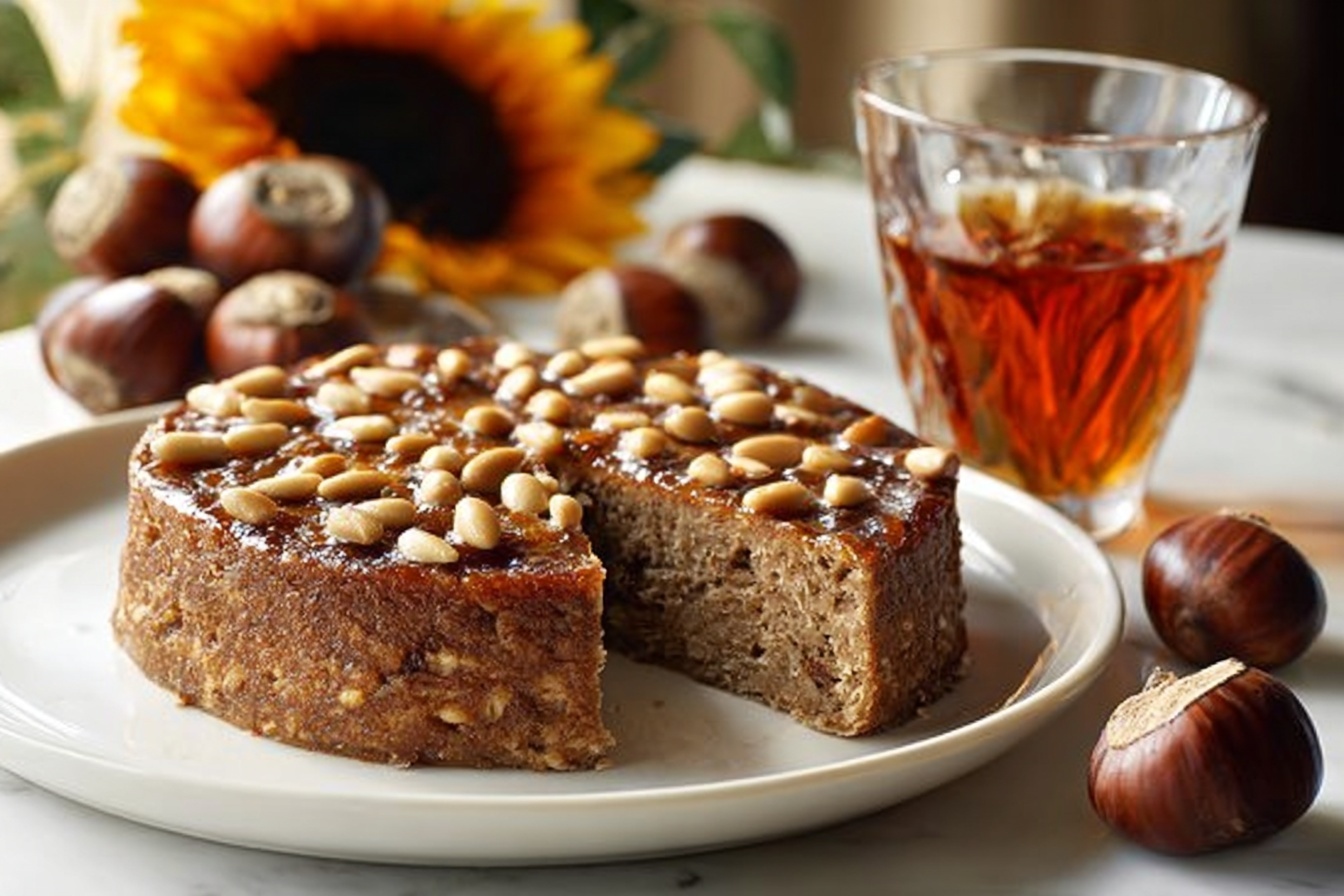
Castagnaccio ~ Tuscan Chestnut Cake is a time-honored Italian dessert that will instantly transport you to the rolling hills and chestnut forests of Tuscany. This rustic cake has a storied tradition, made with chestnut flour, sweetened only by raisins and a whisper of candied orange, and enriched with earthy olive oil and crunchy pine nuts. It’s gluten-free, naturally sweet, and brimming with character — perfect for those who love their desserts a little less usual and a lot more soulful. If you’re searching for a truly unique treat to share with friends and family, Castagnaccio ~ Tuscan Chestnut Cake might just become your new autumn obsession.

Ingredients You’ll Need
What makes Castagnaccio ~ Tuscan Chestnut Cake so special is its simplicity — each ingredient is essential and lends something lovely, from its fudgy texture to subtle flavors. Here’s what you’ll need (plus a few smart tips for getting each element just right):
- Raisins: Plump, sweet, and juicy, raisins provide just the right touch of natural sweetness in every bite.
- Sweet Wine: Use a Tuscan Vin Santo or any fruity dessert wine to soften the raisins and deepen the flavor profile of the cake.
- Chestnut Flour: This is the star! Chestnut flour has a delicate, nutty-sweet flavor that makes the cake unmistakably Tuscan.
- Water: Use just enough to make a thick, pourable batter; chestnut flour loves moisture and gets creamy when whisked well.
- Olive Oil: A high-quality extra-virgin olive oil adds fruitiness and earthiness, keeping the cake moist and rich.
- Pine Nuts: Their buttery crunch brings texture to the tender crumb of the cake—don’t skip them!
- Candied Orange: A teaspoon of finely chopped candied orange brightens up the cake with citrusy sparkle.
- Salt: Just a pinch does wonders to balance the sweet-savory flavors.
How to Make Castagnaccio ~ Tuscan Chestnut Cake
Step 1: Prepare Your Pan and Oven
Start by preheating your oven to 375 degrees F (190 degrees C). Lightly grease a 9-inch springform pan with a little olive oil. This not only prevents sticking but also adds a subtle fruity undertone when the cake bakes.
Step 2: Plump the Raisins
In a small saucepan, combine the raisins and sweet wine. Heat the mixture to a gentle boil, then remove from the heat. Let the raisins sit and soak up the wine for about 10 minutes until they’re beautifully plump and flavor-packed. Once done, drain off and discard the excess wine.
Step 3: Mix the Batter
In a large bowl, whisk together the chestnut flour, 4 tablespoons of the olive oil, candied orange, salt, plumped raisins, and 2 cups of water. Whisk it well to get rid of any lumps and ensure the batter is silky smooth. If the mixture feels too thick, add more water in small splashes. Remember, your goal is a batter that’s looser than pancake batter but still has body.
Step 4: Assemble the Cake
Pour the batter into your prepared pan. It should settle into a moderately thick even layer. Sprinkle pine nuts in an even layer over the top of the batter — they’ll toast up beautifully and add a rustic look and satisfying crunch.
Step 5: Add the Olive Oil Finishing Touch
Drizzle the remaining 2 tablespoons of olive oil over the top of the cake. This will help to create a golden, almost caramelized crust while keeping the interior luxuriously moist.
Step 6: Bake to Perfection
Slide the pan into the oven and bake for around 45 minutes. You’re looking for a gently set cake with lightly browned edges and a matte surface. Once done, let the Castagnaccio ~ Tuscan Chestnut Cake cool completely in the pan before you attempt to slice and serve — this helps it hold its shape and lets the flavors settle and bloom.
How to Serve Castagnaccio ~ Tuscan Chestnut Cake
Garnishes
Traditionally, this cake is served just as it is, perhaps with a scattering of extra pine nuts or a light dusting of powdered sugar. For a modern twist, add a dollop of ricotta cheese, a drizzle of chestnut honey, or a few fresh orange zest strands for brightness and visual flair.
Side Dishes
Castagnaccio ~ Tuscan Chestnut Cake pairs perfectly with simple sides that contrast its deep earthiness. Try it with sliced crisp apples, a segment of rustic cheeses (pecorino is a lovely option), or even a handful of lightly toasted walnuts for extra crunch. And let’s not forget a glass of Vin Santo or good-quality dessert wine!
Creative Ways to Present
Cut the cake into slim wedges and arrange on a vintage platter for a rustic feel, or use a biscuit cutter for small, elegant rounds to serve at a cocktail gathering. For festive occasions, stack slices in alternating layers with clouds of whipped ricotta and dribbles of honey — it’s a beautiful showstopper while staying true to the Castagnaccio ~ Tuscan Chestnut Cake roots.
Make Ahead and Storage
Storing Leftovers
Once cooled, any leftover Castagnaccio ~ Tuscan Chestnut Cake can be kept in an airtight container at room temperature for up to 3 days. The flavors deepen over time, so don’t be surprised if you love it even more the next day!
Freezing
This cake freezes beautifully. Wrap individual slices tightly in plastic wrap, then place them in a freezer-safe bag. Thaw overnight at room temperature before serving — the texture stays dense and fudgy, just the way it should be.
Reheating
If you prefer your cake slightly warm (it’s heavenly that way), pop a slice in a low oven (300 degrees F) for about 8–10 minutes. Resist microwaving, as it can turn chestnut cakes gummy. A quick reheat in the oven brings back that lovely contrast of moist crumb and toasty top.
FAQs
Can I substitute regular flour for chestnut flour?
For an authentic Castagnaccio ~ Tuscan Chestnut Cake experience, chestnut flour is essential since it creates the unique flavor and texture. Regular wheat flours don’t offer the same sweetness or fudgy, earthy character. If you must substitute, try to find gluten-free flour blends with nut flours, though the result will be different.
Is Castagnaccio naturally gluten-free?
Yes! Chestnut flour contains no gluten, making this cake a fantastic option for anyone avoiding wheat or gluten. Just be sure to check your other ingredients (like candied orange) for any potential gluten cross-contamination.
Can I make Castagnaccio ~ Tuscan Chestnut Cake in advance?
Absolutely. The cake keeps well at room temperature for a few days, and many fans say the flavor actually improves after resting overnight. You can also freeze it for longer storage and thaw before serving.
What wine pairs best with this cake?
This rustic cake sings when paired with Tuscan Vin Santo, a traditional dessert wine, but other sweet Muscats or even a bold amaro work beautifully. A little sip alongside each forkful is a match made in heaven!
Can I add different dried fruits or nuts?
While the classic recipe features raisins and pine nuts, feel free to get creative! Dried figs, cranberries, walnuts, or hazelnuts make lovely variations while staying true to the spirit of Castagnaccio ~ Tuscan Chestnut Cake.
Final Thoughts
If you’re ready to explore savory-sweet, old-world Italian baking at its finest, don’t let another fall weekend slip by without making Castagnaccio ~ Tuscan Chestnut Cake. It’s a conversation starter, a comfort food, and a little taste of Tuscan magic to share with everyone around your table.
Castagnaccio ~ Tuscan Chestnut Cake Recipe
- Prep Time: 20 minutes
- Cook Time: 45 minutes
- Total Time: 1 hour 5 minutes
- Yield: 10 servings 1x
- Category: Dessert
- Method: Baking
- Cuisine: Italian
- Diet: Vegetarian
Description
Castagnaccio is a traditional Tuscan chestnut cake that is rich in flavor and perfect for a cozy dessert. Made with chestnut flour, olive oil, pine nuts, and sweet wine-soaked raisins, this rustic cake offers a unique combination of nutty and sweet flavors.
Ingredients
Raisin Mixture:
- 1/2 Cup Raisins
- 1/2 Cup Sweet Wine
Cake Batter:
- 4 Cups Chestnut Flour
- 2 to 3 Cups Water
- 6 Tablespoons Olive Oil
- 4 Tablespoons Pine Nuts
- 1 Teaspoon Finely Chopped Candied Orange
- Pinch of Salt
Instructions
- Preheat Oven: Preheat oven to 375°F and grease a 9-inch spring-form pan.
- Prepare Raisin Mixture: Boil raisins and sweet wine in a saucepan, let it plump for 10 minutes, then drain.
- Mix Ingredients: In a bowl, combine chestnut flour, olive oil, candied orange, salt, raisins, and water.
- Create Batter: Whisk until smooth, adjusting water for batter consistency.
- Bake: Pour batter into pan, top with pine nuts, drizzle with oil, and bake for about 45 minutes.
- Cool and Serve: Allow the cake to cool before serving.
Nutrition
- Serving Size: 1 slice
- Calories: 280
- Sugar: 12g
- Sodium: 50mg
- Fat: 12g
- Saturated Fat: 2g
- Unsaturated Fat: 8g
- Trans Fat: 0g
- Carbohydrates: 38g
- Fiber: 4g
- Protein: 5g
- Cholesterol: 0mg
Your email address will not be published. Required fields are marked *