
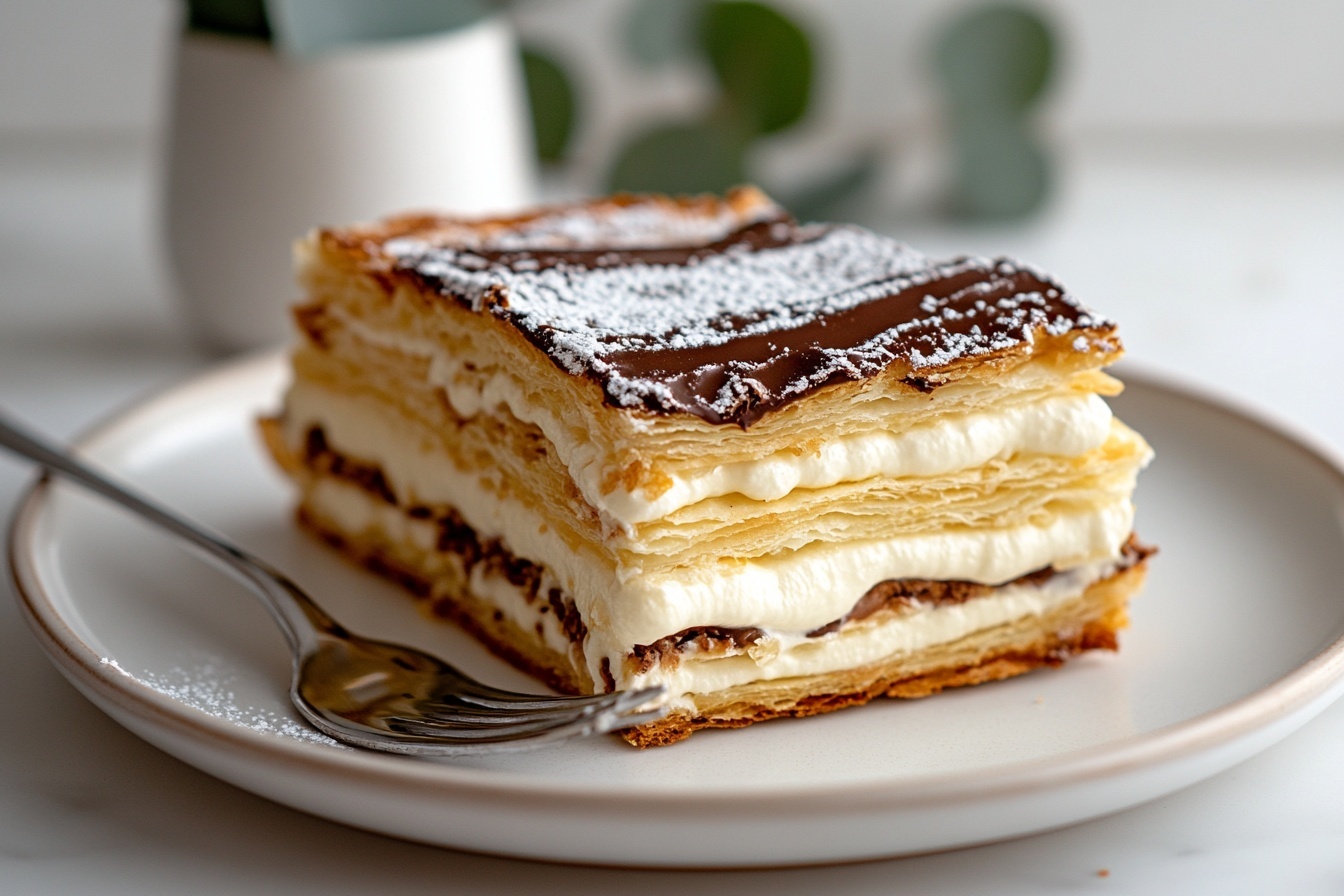
If you’ve ever admired the pastry shop window lined with impossibly crisp, creamy, and beautifully decorated layers, you’ve locked eyes with the legendary Mille-Feuille (Napoleon Pastry). This elegant French dessert balances the flake of buttery pastry with luscious vanilla-scented cream, finished with its signature marbled icing. Every bite is pure delight, combining texture, fragrance, and a swirl of old-world charm. It’s the kind of treat that turns a simple gathering into a celebration and brings out everyone’s inner pastry chef!

Ingredients You’ll Need
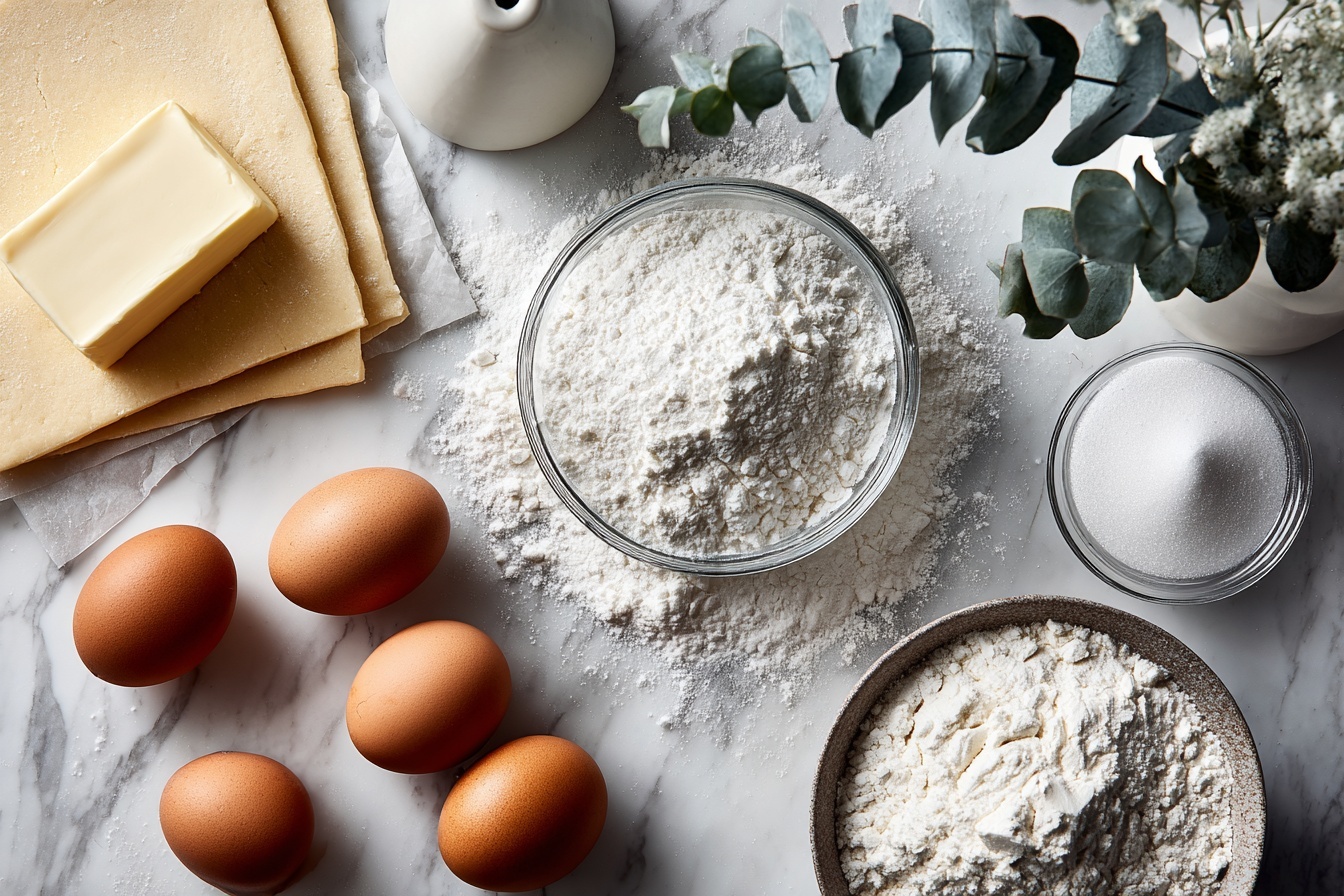
While Mille-Feuille (Napoleon Pastry) looks sophisticated, its magic is rooted in just a handful of quality ingredients. Each one brings unique flavor or texture—from the flaky puff pastry to luxurious vanilla pastry cream and classic fondant glaze. Choose the best for results that rival any patisserie!
- Puff Pastry: Use homemade rough puff or quality store-bought sheets for crisp, flaky layers. Thaw frozen pastry as needed for easy handling.
- All-purpose Flour: Essential for rolling out the dough without sticking, ensuring neat layers in your Mille-Feuille (Napoleon Pastry).
- Egg Yolks: Provide richness and a vibrant yellow hue to the silky pastry cream filling.
- Cornstarch: Acts as the thickening agent, giving the cream its signature custardy set.
- Whole Milk: Delivers the best mouthfeel and flavor—don’t skimp with skim or substitutes here!
- Granulated Sugar: Sweetens both the pastry cream and supports caramelization of the pastry layers.
- Unsalted Butter: Added for flavor and richness in the cream; let it soften for smooth blending.
- Vanilla Extract and Bean: Double up for depth—the extract brings base notes, while fresh seeds add real perfume.
- Salt: A tiny pinch sharpens and balances sweetness in both cream and dough.
- Heavy Cream: Whipped and folded into the pastry cream for an airy, mousse-like texture.
- Confectioners’ Sugar: Sifted for a perfectly smooth, glossy icing finish.
- Milk (for Icing): Just enough to achieve a spreadable glaze—use a splash at a time.
- Semi-Sweet Chocolate: Melted for those classic chevron stripes atop your finished Mille-Feuille (Napoleon Pastry).
How to Make Mille-Feuille (Napoleon Pastry)
Step 1: Prep the Puff Pastry
If using homemade rough puff, continue through its second chilling. Store-bought puff pastry should be thawed until just pliable but still cold. Both options need that refrigeration time—the colder the dough, the higher and flakier it bakes. This is your foundation, so take your time:
Step 2: Make the Pastry Cream
Whisk egg yolks with cornstarch in a heatproof bowl. Don’t worry if it looks awkwardly dry at first; keep working it until it blends into a smooth, thick paste. If it’s crumbly, add a few drops of the milk you’ll use later just to bring it together. Set aside while you heat your milk and sugar—whisk these together over medium heat until the sugar dissolves, then heat to a gentle simmer.
Step 3: Temper the Eggs
Take your warm milk and sugar mixture off the heat. Pour it gradually into your yolk-cornstarch paste, whisking the whole time. This careful process prevents accidentally scrambling the yolks. Once combined, pour everything back (through a sieve) into the saucepan to catch any stray cooked egg, ensuring your Mille-Feuille (Napoleon Pastry) cream is silky smooth.
Step 4: Cook the Pastry Cream
Return the saucepan to medium heat. Whisk steadily—it’ll get frothy, then gradually thicken to a velvety custard as big bubbles start to burst through the surface. Let it bubble for about 20 seconds after thickening, then remove from heat. Immediately whisk in butter, vanilla, and the vanilla bean seeds, plus a pinch of salt. Cool for about 10 minutes, then press plastic wrap directly onto the surface to stop a skin from forming. Refrigerate for at least 3 hours, or overnight for deepest flavor.
Step 5: Bake the Puff Pastry Layers
Preheat your oven to 400°F (204°C). Roll the chilled dough into an even 11×16-inch rectangle on a floured surface. Transfer to a parchment-lined baking sheet and dock (prick) all over with a fork. Top with another sheet of parchment and a second baking sheet weighted down (pie weights or dried beans work). This trick ensures thin, crisp, even layers—the signature of Mille-Feuille (Napoleon Pastry). Bake for 20 minutes, remove the weights and paper, then bake another 7 to 9 minutes until beautifully golden and flaky. Cool completely before assembling.
Step 6: Whip the Cream and Finish the Filling
After the pastry cream is completely chilled, whip the cold heavy cream until soft, billowy peaks form. Fold the whipped cream gently into your chilled pastry cream, taking care not to over-mix. This transforms the filling into a dreamy, light mousse that will hold its shape between pastry layers.
Step 7: Prepare the Icing and Chocolate
Whisk sifted confectioners’ sugar with milk and a splash of vanilla to make a thick, glossy icing. Melt your chocolate in the microwave at 20-second increments, stirring in between sessions, until smooth and liquid. Transfer the chocolate to a squeeze bottle or piping bag. These toppings give your Mille-Feuille (Napoleon Pastry) its iconic patisserie look.
Step 8: Cut and Layer the Pastry
Using a sharp knife, trim the cooled pastry to remove uneven edges. Measure and cut into 15 squares (typically about 3×3 inches, but adjust as needed). Spread icing on 5 of the squares, then pipe chocolate lines and drag a toothpick across for the classic chevron pattern. Allow the icing to set.
Step 9: Assemble the Mille-Feuille (Napoleon Pastry)
Pipe 9 generous dollops of pastry cream onto a plain pastry square, top with another plain square, add more cream, then cap off with a chocolate-decorated square. Repeat to create 5 pastries in total. Chill at least 30 minutes before serving to allow the cream to set—the anticipation only adds to the excitement!
How to Serve Mille-Feuille (Napoleon Pastry)
Garnishes
Just before serving, a light dusting of extra confectioners’ sugar or a few edible gold flakes can take presentation up a notch. Fresh berries on the plate provide a pretty color contrast and a juicy burst to balance the Mille-Feuille (Napoleon Pastry)’s richness.
Side Dishes
Pair this showstopper with a simple espresso, strong coffee, or fragrant black tea. For special occasions, a dollop of softly whipped cream or a spoonful of lightly sweetened fruit compote makes a lovely accent to each serving.
Creative Ways to Present
Serve each Mille-Feuille (Napoleon Pastry) square on its own for dramatic flair, or cut diagonally for a chic triangle. Individual plates with a swirl of chocolate sauce or raspberry coulis, or even elegant dessert boards garnished with berries and mint, turn it into an unforgettable final course.
Make Ahead and Storage
Storing Leftovers
Store Mille-Feuille (Napoleon Pastry) in an airtight container in the fridge. Layers will soften a bit over time, but flavor deepens—enjoy within three days for best texture and taste. If you anticipate leftovers, keep assembled pastries uncovered for the first hour to minimize sogginess.
Freezing
While fresh is best, you can freeze unfilled, baked pastry squares for up to a month—just thaw and crisp briefly in a hot oven before assembling. Avoid freezing the assembled Mille-Feuille (Napoleon Pastry) as the cream filling doesn’t thaw gracefully.
Reheating
If you’ve stored just the pastry layers, refresh them in a hot oven (400°F) for a few minutes until crisp. Filled and assembled pastries should always be served chilled or at room temperature—never warm or hot, to preserve the cream’s texture.
FAQs
Can I use store-bought puff pastry for Mille-Feuille (Napoleon Pastry)?
Absolutely! Quality store-bought puff pastry works beautifully and saves you time—you’ll still achieve delicate, flaky layers. Just ensure it’s properly thawed and cold before rolling and baking.
What’s the best way to cut Mille-Feuille (Napoleon Pastry) without smashing the layers?
Use a large, sharp serrated knife and make gentle sawing motions. Chilling the assembled pastries for at least 30 minutes before cutting helps the cream set and minimizes squishing, delivering that sharp, patisserie-style look.
How far ahead can I assemble Mille-Feuille (Napoleon Pastry)?
You can assemble up to 8 hours in advance; the pastry will remain crisp, and flavors will meld together. Longer than 12 hours, and the layers may lose their crunch—still delicious, just a bit softer in texture.
Is there a shortcut for the decorative chevron pattern?
No piping bag? No problem! Fill a zip-top bag with the melted chocolate, snip off a tiny corner, and pipe right onto the icing. Use a toothpick or skewer to drag through the lines and create that classic Mille-Feuille (Napoleon Pastry) look.
Can I flavor the pastry cream?
Definitely! While vanilla is classic, you can infuse the milk with espresso, citrus zest, or even a touch of almond extract for a creative spin on your Mille-Feuille (Napoleon Pastry). Just keep the ratios the same for the best set.
Final Thoughts
Nothing says “impressive homemade dessert” like pulling Mille-Feuille (Napoleon Pastry) from your own kitchen, especially when each bite delivers bakery-level delight. Don’t be intimidated by the layers—half the fun is in the process, and the other half is sharing (and savoring!) the results. Set aside an afternoon and treat yourself to a true French classic—it’s truly worth it.
Print
Mille-Feuille (Napoleon Pastry) Recipe
- Prep Time: 2 hours
- Cook Time: 1 hour
- Total Time: 5 hours
- Yield: 5 servings 1x
- Category: Dessert
- Method: Baking
- Cuisine: French
- Diet: Vegetarian
Description
Learn how to make a classic French pastry, the Mille-Feuille (Napoleon Pastry), at home. This elegant dessert features layers of flaky puff pastry filled with creamy pastry cream and topped with a decorative chocolate and vanilla icing.
Ingredients
Puff Pastry
- 1 lb. homemade rough puff pastry or store-bought frozen & thawed puff pastry (2 sheets)
- all-purpose flour as needed to roll dough
Pastry Cream
- 4 large egg yolks, cold or room temperature
- 3 Tablespoons (23g) cornstarch
- 2 cups (480ml) whole milk (do not use low-fat or nondairy)
- 1/2 cup (100g) granulated sugar
- 1 Tablespoon (14g) unsalted butter, softened to room temperature
- 1 teaspoon pure vanilla extract
- seeds scraped from 1/2 vanilla bean (or extra 1/2 teaspoon vanilla extract)
- small pinch salt
- 1/2 cup (120ml) heavy cream or heavy whipping cream, cold
Vanilla Icing & Chocolate Topping
- 1 cup (120g) confectioners’ sugar, sifted
- 1.5 Tablespoons milk (dairy or nondairy)
- 1/2 teaspoon pure vanilla extract
- 2 ounces (57g) semi-sweet chocolate, coarsely chopped
Instructions
- Prepare Puff Pastry: Either make homemade rough puff pastry or thaw store-bought pastry. Keep in the refrigerator until needed.
- Make the Pastry Cream: Whisk egg yolks and cornstarch. Heat milk and sugar, then combine with egg mixture. Cook until thickened, then add butter, vanilla, and salt. Chill.
- Shape the Dough: Roll pastry into a rectangle, dock the surface, and bake until golden brown.
- Finish the Cream Filling: Whip heavy cream, then combine with chilled pastry cream. Refrigerate.
- Assemble the Pastries: Trim and cut pastry into squares. Ice some squares with vanilla icing and chocolate topping.
- Assemble the Mille-Feuille: Pipe cream filling between pastry layers, alternating with decorated squares. Refrigerate before serving.
Notes
- For best results, chill the assembled pastries before serving to set the cream filling.
- Store any leftovers in the refrigerator to maintain freshness and texture.
Nutrition
- Serving Size: 1 serving
- Calories: 420 kcal
- Sugar: 23g
- Sodium: 180mg
- Fat: 25g
- Saturated Fat: 14g
- Unsaturated Fat: 8g
- Trans Fat: 0g
- Carbohydrates: 42g
- Fiber: 1g
- Protein: 6g
- Cholesterol: 160mg
Your email address will not be published. Required fields are marked *